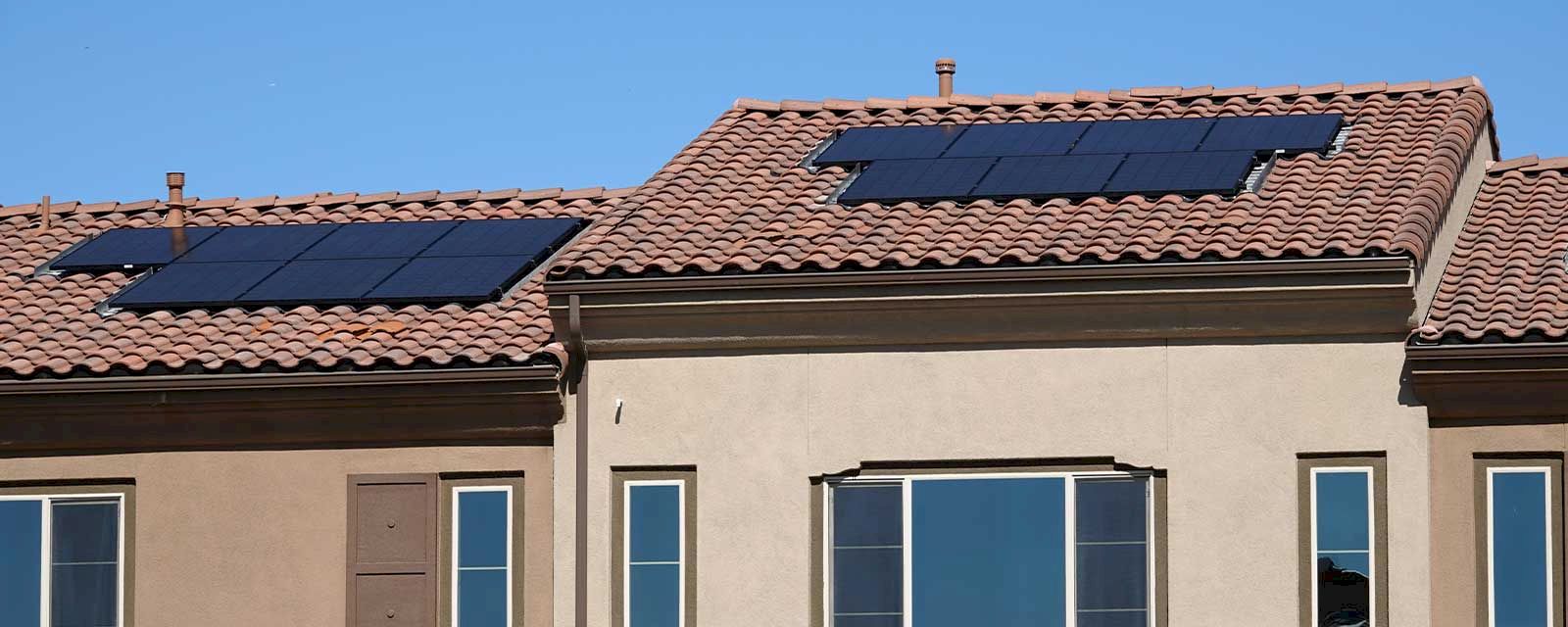
Solar energy is becoming an essential topic for the building sector in Switzerland. With the evolution of cantonal energy regulations and the strengthening of photovoltaic obligations, property owners, developers, architects, and general contractors must integrate solar energy production into an increasing number of projects. For tradespeople in the building sector, this evolution represents a major opportunity, particularly in new constructions, significant roof renovations, and energy renovation projects.
The MoPEC 2026 strengthens the role of photovoltaics in buildings. Suitable roof surfaces must be utilized in new constructions, and the obligation extends to significant roof renovations, especially when a complete replacement or an intervention affecting a large part of the surface is planned. This evolution creates additional construction site volume for roofers, electricians, solar installers, facade workers, carpenters, and energy renovation companies.
In this context, tradespeople have every interest in positioning themselves now. Clients will need professionals capable of diagnosing a roof, preparing the support, installing the modules, connecting the installation, coordinating the trades, and complying with cantonal regulations. With ArtiBox, building professionals can access qualified requests and secure their workload in a solar market expected to develop significantly in the French-speaking part of Switzerland.
Why are solar panels becoming essential in Switzerland?
Switzerland is accelerating its energy transition in the building sector. Roofs represent significant potential for producing renewable electricity directly where it is consumed. The new regulations aim to better utilize these surfaces, particularly during new constructions and significant renovations.
A strengthening solar obligation
Photovoltaics is no longer just an option chosen by the most committed property owners. It is gradually becoming a requirement integrated into construction and renovation projects. When a roof is suitable for solar production, contractors must increasingly consider the installation of panels from the design stage or during a significant intervention.
For tradespeople, this changes the nature of construction sites. A roof renovation is no longer limited to replacing a covering or improving waterproofing. It can now include considerations for solar production, the supporting structure, electrical connections, and coordination with other energy-related work.
An evolution driven by the cantons
The MoPEC sets a harmonized framework, but its application then depends on cantonal legislation. Rules may therefore vary by canton, including effective dates, thresholds, affected buildings, and possible exceptions. This organization requires tradespeople to maintain good local awareness.
A professional operating in Geneva, Vaud, Neuchâtel, Fribourg, Valais, Jura, or French-speaking Bern must verify the applicable requirements in each canton. This knowledge becomes a selling point for clients who want to avoid administrative errors.
Easier to consider solar facades
Starting in 2026, certain solar installations on facades may benefit from a notification procedure instead of a traditional permit procedure, provided the stipulated conditions are met. This simplification can open new opportunities, especially for urban buildings, collective housing, and constructions where the roof is insufficient to meet needs.
For tradespeople, this broadens the scope of interventions. Facade specialists, electricians, solar installers, and companies specialized in building envelopes can offer integrated, aesthetic solutions that comply with architectural constraints.
What are the consequences for building tradespeople?
The solar obligation transforms the way construction sites are conceived. Tradespeople should no longer view photovoltaics as an isolated profession reserved only for specialized installers. It becomes a cross-disciplinary topic involving multiple trades.
An expected increase in quote requests
When the installation of solar panels becomes mandatory or strongly recommended, property owners must seek professionals capable of responding quickly. Requests may pertain to new construction, complete roof renovations, roof covering replacements, or more comprehensive energy renovation projects.
Tradespeople who can clearly respond to these requests will be able to capture a significant share of the market. Responsiveness, the quality of quotes, and the ability to explain the project's steps will be decisive.
Stronger coordination between trades
A successful photovoltaic construction site often involves multiple participants. The roofer prepares and secures the roof, the electrician ensures the connection, the solar installer sizes and installs the modules, the carpenter can check the structure, and the facade specialist can work on integrated solutions in the facade.
This coordination creates partnership opportunities. Tradespeople who build a reliable network can respond to more comprehensive projects and increase their added value to clients.
A need for skill enhancement
Solar construction sites require specific knowledge: orientation, inclination, shading, allowable load, waterproofing, roof safety, connections, inverters, self-consumption, batteries, administrative procedures, and potential subsidies.
A tradesperson who understands these concepts can better advise the client, communicate more effectively with other participants, and avoid technical errors that could compromise the installation's performance.
Which trades will benefit from the photovoltaic obligation?
The rise of solar energy is not only about photovoltaic installers. Several building trades can benefit directly or indirectly from this new dynamic.
Roofers
Roofers are on the front line. Any solar obligation related to a roof creates a demand to check the condition of the covering, prepare the support, treat the waterproofing, and integrate the panels without weakening the structure.
- Roof diagnosis before installation
- Replacement or renovation of covering
- Reinforcement or adaptation of the support
- Installation of solar integration systems
- Treatment of waterproofing around the fixings
- Coordination with the electrician or solar installer
Electricians
Electricians play a crucial role in connecting, securing, and commissioning installations. The growth of photovoltaics generates needs for electrical panels, protections, inverters, wiring, self-consumption management, and sometimes storage.
- Connection of the photovoltaic installation
- Adaptation of the electrical panel
- Installation of necessary protections
- Installation and configuration of inverters
- Integration of self-consumption solutions
- Control and commissioning
Solar Installers
Specialized installers will benefit from a higher volume of requests. Their expertise will be sought to size the installations, choose the modules, optimize performance, and ensure compliant installation.
- Solar feasibility study
- Sizing of the installation
- Selection of panels and equipment
- Installation of photovoltaic modules
- Performance optimization
- Production monitoring and maintenance
Facade Specialists and Envelope Experts
With the simplification of solar installations on facades in some cases, facade specialists can also position themselves. Photovoltaic modules integrated into facades can meet aesthetic, energy, and architectural needs.
- Preparation of the facade support
- Integration of vertical solar modules
- Coordination with waterproofing and insulation
- Aesthetic treatment of visible elements
- Work on collective or tertiary buildings
What types of construction sites will multiply?
The solar obligation will generate several families of construction sites. Tradespeople must identify them to adapt their commercial offer and organization.
New Constructions
New constructions are directly concerned with the integration of solar energy. From the design stage, the roof must be considered as a potential production surface. This involves collaboration between the architect, roofer, electrician, and photovoltaic installer.
For tradespeople, these projects offer opportunities from the early phases of the construction site. Those who know how to work with plans, anticipate installation constraints, and coordinate their intervention with other trades can become sought-after partners.
Major roof renovations
Major roof renovations represent a particularly promising segment. When a property owner completely replaces their roof or works on a large part of the surface, the question of solar energy becomes unavoidable.
For a roofer, this is an opportunity to offer a more comprehensive service. Instead of only selling a roof renovation, they can integrate a solar assessment, collaborate with an installer, or direct the client towards an appropriate photovoltaic solution.
Comprehensive energy renovations
Solar energy is often integrated into broader projects: insulation, heating changes, ventilation, window replacements, and improvements in self-consumption. These comprehensive renovations involve multiple trades and can generate more profitable construction sites.
Tradespeople who know how to work in networks therefore have an advantage. They can respond to more complete requests and reassure contractors about the coordination of the project.
Solar installations on facades
Solar facades can be of interest for urban buildings, collective housing, tertiary constructions, or projects where the roof space is limited. The simplified announcement procedure in certain cases can make these projects more accessible.
This segment remains technical, but it can become a differentiating factor for companies capable of offering aesthetic and well-integrated solutions.
How can tradespeople position themselves now?
The development of solar energy requires anticipation. Tradespeople who wait for obligations to be fully integrated in all regions risk falling behind. Those who train and structure their offerings now will be able to capture the first requests.
Training in the basics of photovoltaics
A tradesperson does not necessarily need to become a solar expert to benefit from the market. However, they must understand the basics: orientation, shading, structure, efficiency, safety, connection, self-consumption, and administrative constraints.
This technical knowledge allows them to identify the right projects, better advise clients, and work effectively with specialists.
Creating partnerships between trades
Solar energy is rarely an isolated project. A roofer can partner with an electrician, a photovoltaic installer can collaborate with a carpenter, and a renovation company can integrate a solar partner into its offering.
These partnerships allow for quicker responses to requests and provide a complete solution to clients.
Adapting quotes and commercial documents
Quotes need to become more precise. They should distinguish between roof preparation, panel installation, connection, procedures, any electrical adaptations, and additional work.
- Roof diagnosis
- Available surface
- Type of panels offered
- Fixing or integration system
- Waterproofing work
- Electrical connection
- Intervention deadlines
- Access conditions to the construction site
- Elements not included
Why does regulation create a sustainable volume of construction sites?
A regulatory obligation changes the nature of the market. When an owner must integrate a solar installation in certain cases, demand is no longer solely dependent on their personal motivation. It becomes linked to the natural cycle of construction and renovations.
Every renovated roof becomes an opportunity
Roofs age, need maintenance, and eventually require renovation. If major renovations trigger a solar obligation, every roofing project can become a potential photovoltaic construction site.
This evolution is particularly interesting for roofers. It allows for transforming a standard intervention into a higher value-added project.
Every new construction must integrate solar from the design stage
In new constructions, solar can be considered from the outset. This reduces integration difficulties and creates more structured demands for professionals.
Tradespeople capable of intervening upstream with architects, developers, or general contractors can thus position themselves on larger projects.
Facades open a new market
Facade installations expand the solar potential of buildings. In urban areas or buildings with limited available roof space, they can become a complementary solution.
This market will require specific skills, particularly in aesthetics, architectural integration, waterproofing, fixing, and connection.
What risks should tradespeople anticipate?
Solar represents an opportunity, but the technical, administrative, and commercial risks should not be underestimated. A poorly prepared construction site can lead to delays, cost overruns, or disputes.
Cantonal differences
Solar obligations do not apply everywhere in the same way at the same time. Cantons have their own schedules, thresholds, and procedures. A tradesperson must therefore avoid promising a uniform rule for all of Switzerland.
Before advising a client, they must check the requirements of the relevant canton or invite the contractor to confirm the rules with the competent service.
Technical constraints of roofing
Not all roofs lend themselves to photovoltaics in the same way. Orientation, slope, shading, condition of the framework, allowable load, access, safety, and waterproofing must be analyzed.
A tradesperson should avoid proposing a standard solution without prior diagnosis. The quality of the study determines the success of the construction site.
Coordination with electrical connection
A solar installation is not limited to installing modules. The connection, protections, inverter, metering, and commissioning must be carried out correctly.
The roofer or the general contractor must therefore work with a competent electrician to secure the entire project.
The profitability of construction sites
As with all building work, the increase in demand can attract strong competition. Tradespeople must avoid underestimating their prices. Solar construction sites require time, materials, coordination, and significant technical responsibility.
A quote that is too low can severely reduce the margin, especially if unforeseen issues arise on the roof or connection.
How does ArtiBox help tradespeople capture solar construction sites?
In a growing market, visibility becomes essential. Tradespeople must be present at the right time, with the right clients, and with a clear offer. ArtiBox allows building professionals to receive tailored requests and secure their workload.
Easily find qualified construction sites
ArtiBox facilitates the connection between tradespeople and contractors. Professionals can access requests related to renovation, roofing, electricity, solar installation, or energy improvement.
- Roof renovation requests
- New construction projects
- Photovoltaic installations
- Associated electrical work
- Comprehensive energy renovations
- Interventions in the French-speaking part of Switzerland
Reduce downtime
Solar can become a lever to stabilize activity. Tradespeople who rely solely on word-of-mouth can experience gaps in their schedule. ArtiBox allows for diversifying sources of requests and anticipating less busy weeks.
- Better commercial visibility
- Complement to existing clients
- Access to targeted requests
- More regular workload
Positioning in the right trades
A tradesperson can showcase their specialties on ArtiBox: roofing, covering, electricity, facades, insulation, energy renovation, or solar installation. The clearer the profile, the more coherent the requests received are with their skills.
- Presentation of trades practiced
- Areas of intervention
- Photos of completed projects
- Professional insurance
- References from construction sites
- Availability
What best practices to adopt to benefit from the solar obligation?
Tradespeople who want to capture this new market must structure their approach. It is not enough to say that they install solar panels. They must reassure, advise, and demonstrate their ability to work within a demanding regulatory and technical framework.
Diversify skills and partnerships
A roofer who understands photovoltaics, an electrician who masters roofing constraints, or a solar installer who works with facade specialists has a competitive advantage. Cross-functionality becomes an asset.
Prepare detailed quotes
Swiss clients expect clear documents. A quote must detail the services, materials, limits of intervention, deadlines, and any options. On a solar construction site, this precision is even more important.
Check cantonal regulations before each project
Each project must be analyzed according to the canton, the type of building, the nature of the work, and the applicable procedures. Tradespeople must avoid overly quick generalizations.
Highlight your achievements
Photos of solar construction sites, roof renovations, connections, or integrated installations build trust. Clients want to see concrete examples before committing.
Stay responsive in communications
The solar market is becoming more competitive. A client requesting a quote often contacts several professionals. Responding quickly, offering a technical visit, and sending a clear offer can make a difference.
Conclusion: solar becomes a major lever for Swiss tradespeople
The gradual obligation to install solar panels in Switzerland is transforming the construction market. New buildings, significant roof renovations, and facade installations create new opportunities for roofers, electricians, photovoltaic installers, facade workers, and energy renovation companies.
This regulatory evolution can generate a sustainable volume of construction sites, but it requires preparation. Tradespeople must train, check cantonal regulations, build partnerships, adapt their quotes, and learn to position themselves on more technical projects. Those who anticipate now will be able to capture growing demand and differentiate themselves in a rapidly evolving market.
With ArtiBox, construction professionals have a useful tool to find qualified construction sites, showcase their skills, and secure their workload. In this new context, solar is no longer just a regulatory constraint: it is a major business opportunity for Swiss tradespeople.
Sign up for free on ArtiBox and grow your business in solar construction sites, energy renovation, and construction in western Switzerland.