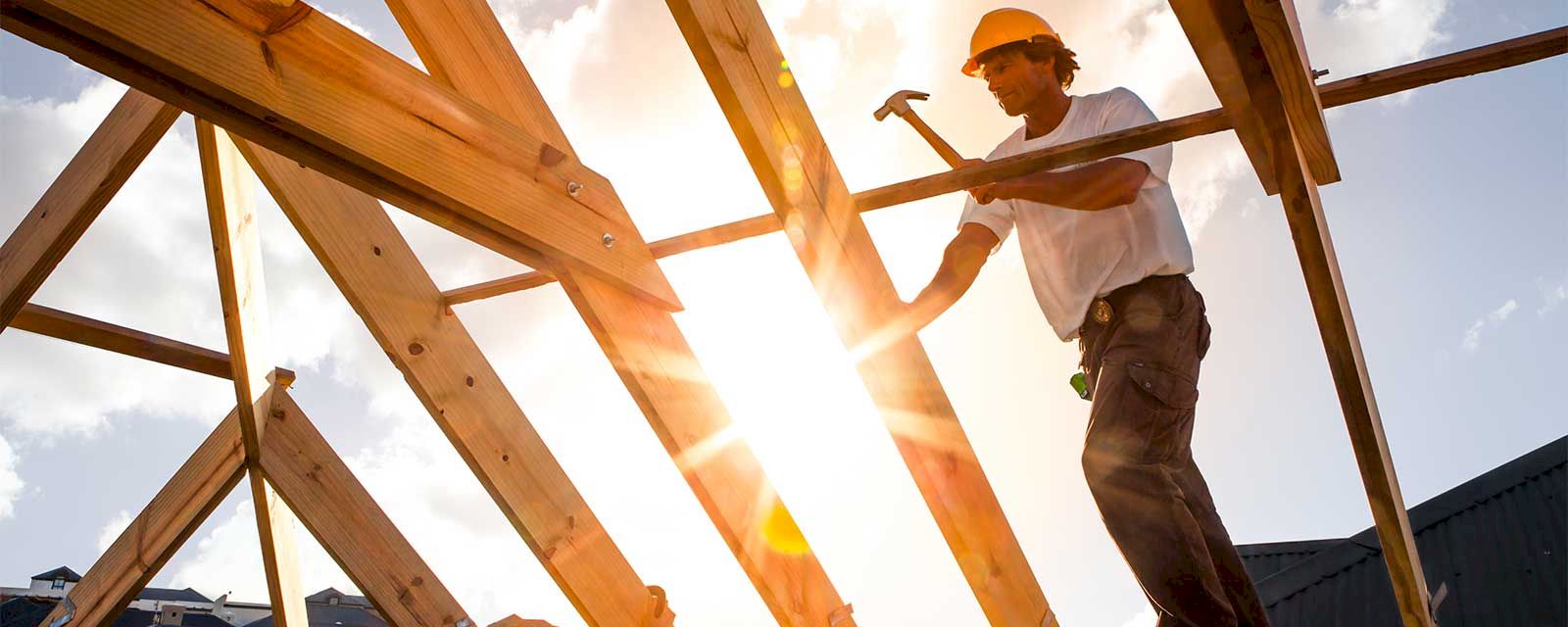
Working as a cross-border tradesperson in Switzerland attracts many construction professionals based in neighboring regions. Geneva, Vaud, Neuchâtel, Valais, and Jura represent dynamic areas for construction trades, particularly in renovation, building maintenance, construction, energy renovation, and finishing work. For a cross-border independent tradesperson in Switzerland, these territories offer real business opportunities.
However, engaging in a trades activity in Switzerland while residing in another country requires serious preparation. G permit, recognition of independent status, social contributions, taxation, VAT, insurance, performance declarations, and cantonal obligations: the rules to follow depend on the duration of intervention, the location of the construction site, the status of the company, and the personal situation of the professional.
A cross-border tradesperson in Switzerland should not start without verifying the applicable framework. EU/EFTA nationals can benefit from facilitated mobility rules, but this does not mean that no steps are necessary. For short-term activities, a notification procedure may sometimes suffice. For regular activity or a company registered in Switzerland, a G cross-border permit and social or tax procedures may be necessary. Here is a practical guide to understand the key points and methodically develop one's activity.
Understanding the status of cross-border tradesperson in Switzerland
A cross-border tradesperson is a professional who resides in a neighboring country and regularly or occasionally works in Switzerland. They can work as an independent, manage a company established in Switzerland, or operate from a company located outside of Switzerland.
Identifying the different possible situations
Not all cross-border tradespeople fall under the same framework. An independent person based in a neighboring region and registered in Switzerland does not have the same obligations as a tradesperson established outside of Switzerland who intervenes occasionally for a service.
It is therefore necessary to distinguish several cases: the independent who creates an activity in Switzerland, the foreign company that detaches its manager or employees, the tradesperson who performs occasional services, and the entrepreneur who regularly works with Swiss clients.
Understanding why the qualification of status is essential
The chosen status influences permits, social contributions, taxation, VAT, insurance, and administrative obligations. A misclassification can lead to delays, refusals, unforeseen contributions, or tax corrections.
Before signing their first quotes, the tradesperson must determine whether they are operating in Switzerland as an established independent, temporary provider, cross-border employee, subcontractor, or manager of a Swiss company.
The G permit for cross-border tradespeople
The G permit, also known as the cross-border authorization, is an important document for individuals who reside outside of Switzerland but work there. It can apply to cross-border employees, as well as to self-employed individuals when the company's headquarters is located in Switzerland.
Understanding how the G permit works
According to the State Secretariat for Migration, EU/EFTA cross-border workers are individuals who reside in an EU/EFTA state and work in Switzerland, either as employees or self-employed with the company's headquarters in Switzerland, while returning to their main residence abroad generally every day or at least once a week. EU/EFTA cross-border workers benefit from professional and geographical mobility throughout Switzerland.
For a tradesperson, this means they can work in different Swiss cantons, provided they comply with the procedures related to their activity, any professional authorizations, insurance, and tax obligations.
Validity of the G permit
For EU/EFTA nationals, the cross-border authorization generally has a validity period of five years when the activity is of indefinite duration or longer than one year. When the activity lasts more than three months but less than one year, the validity typically corresponds to the duration of the activity. Profit-making activities lasting a maximum of three months per calendar year are generally subject to the online notification procedure rather than a traditional authorization.
This distinction is important for tradespeople testing the Swiss market. A professional who only carries out a few occasional interventions does not necessarily follow the same procedure as a contractor who is developing a regular activity.
Who handles the procedures?
For an employment activity, the procedures are generally linked to the employer. In contrast, when an individual wishes to engage in self-employment, they must carry out the necessary procedures themselves. The portal ch.ch specifies that a person wishing to engage in self-employment must present documents proving that they are conducting or will conduct a self-employed activity that allows them to support themselves.
A self-employed tradesperson must therefore prepare a solid file: description of the activity, proof of clients or projects, business plan, projected accounting, insurance, possible registration in the Commercial Register, and administrative documents.
Temporary activity or regular activity: what’s the difference?
The duration and frequency of interventions change the obligations. A tradesperson who works a few days on a Swiss construction site is not in the same situation as a professional who works every week in Geneva, Vaud, or Neuchâtel.
Short-term services
For certain EU/EFTA nationals, providing services in Switzerland for a maximum of 90 days per calendar year may fall under a notification procedure rather than a residence permit. The portal ch.ch indicates that providing services in Switzerland for a maximum of 90 days per calendar year does not require a residence permit, but the activity must be announced electronically no later than the day before the activity begins.
This rule may be of interest to tradespeople who occasionally work on a construction site. However, it is necessary to verify the applicable conditions for the profession, the canton, the type of service, and the situation of the company.
Regular activity in Switzerland
When a tradesperson works regularly in Switzerland, signs recurring contracts, has Swiss clients, or establishes the headquarters of their business in Switzerland, the situation must be structured differently. The G permit, registration, social affiliation, and tax obligations must then be analyzed.
To avoid errors, it is recommended to consult the competent cantonal authorities or a specialized advisor before developing a sustainable activity.
Detached independent status
A tradesperson established outside of Switzerland can temporarily provide services. In this case, they may need to prove their independent status in their country of establishment and comply with the Swiss procedures applicable to foreign service providers.
This situation requires special attention: Switzerland can verify that the activity is genuinely independent and that it is not disguised employment. Therefore, the documents must be consistent with the reality of the work performed.
Taxation of cross-border tradespeople in Switzerland
Taxation depends on the place of residence, the place of activity, the legal form, the canton, and whether or not there is a registered business in Switzerland. Tradespeople based in a neighboring country must be particularly attentive to the applicable tax treaty.
Understanding the principle of taxation of Swiss profits
For a French tax resident who operates an independent activity registered in Switzerland, the French tax administration indicates that the professional profits derived from this independent activity are taxable in Switzerland according to the Franco-Swiss tax treaty. However, these earnings must be declared in France, with elimination of double taxation through a tax credit when conditions are met.
This principle is essential for cross-border tradespeople. Paying tax in Switzerland does not automatically exempt one from declaring income in the country of tax residence.
Declaring income in the country of residence
A cross-border worker generally must declare their income in their country of tax residence, even when it comes from Switzerland. The tax treaty then allows for the avoidance of double taxation according to the applicable rules.
For a tradesperson, it is therefore important to keep tax documents, declared profits, paid taxes, and supporting documents related to Swiss activity.
Consider the cantonal differences
Switzerland is organized into cantons, and taxation can vary depending on the place of activity or headquarters. Geneva, Vaud, Neuchâtel, Valais, and Jura may have different practices and obligations. A cross-border tradesperson must therefore check their situation canton by canton.
It is prudent to work with a fiduciary or tax advisor familiar with cross-border situations.
Social contributions: AVS, AI, APG, and other obligations
Social contributions are a central point for any independent cross-border construction worker in Switzerland. Depending on their status, the tradesperson may be affiliated with the Swiss system or another regime, especially in the case of temporary detachment.
Affiliation with the Swiss system for independent activity in Switzerland
A person who engages in independent activity in Switzerland must, in principle, register with a compensation fund to have their status recognized. The affiliation may concern AVS, AI, and APG.
The fund examines the reality of the activity: economic risk, invoicing to multiple clients, independent organization, investment in equipment, absence of a subordinate relationship, and the ability to bear potential losses.
Recognition of independent status
The status of independent does not depend solely on what is written on an invoice or contract. Social authorities look at the reality of the work. A tradesperson who works exclusively for a single contractor, using their tools and under their direct instructions, may be considered dependent.
To avoid this risk, it is necessary to structure the activity: multiple clients, own pricing, insurance, personal equipment, quotes, invoices, commercial conditions, and real autonomy.
Case of temporary detachment
When a tradesperson remains affiliated in their country of origin and comes to work temporarily in Switzerland, detachment rules may apply. It may be necessary to have documents proving social affiliation in the country of origin, such as a certificate adapted to the situation.
Social coordination rules are technical. A cross-border tradesperson must verify this point before regularly working on Swiss construction sites.
Health insurance, accident insurance, and retirement planning
Working in Switzerland also involves considering personal and professional insurance. Depending on their status, certain coverages may be mandatory or strongly recommended.
Health insurance
People who settle in Switzerland to work must take out health insurance within the timeframe set by law. For cross-border workers, specific rules may apply depending on residence, status, and any right of option.
The cross-border tradesperson must verify their situation before starting, as the choice of a regime can have significant consequences on contributions and healthcare coverage.
Accident insurance
In construction, the risk of accidents is high. A self-employed individual must ensure they have appropriate coverage in case of a work-related accident. If they employ workers in Switzerland, accident insurance according to the LAA becomes a mandatory subject.
A tradesperson should not settle for minimal coverage if their sites involve work at heights, machinery, heavy loads, or technical interventions.
Retirement and income protection
A self-employed individual must also think about their retirement and loss of earnings. In case of work stoppage, they can immediately lose their income. Loss of earnings insurance, appropriate retirement planning, and good accident coverage help secure their activity.
VAT and invoicing for cross-border tradespeople
Swiss VAT must be analyzed as soon as the tradesperson carries out work on Swiss territory. The rules are not the same as in neighboring countries, and the location of the property plays an important role for construction services.
Understanding the threshold for VAT liability
In Switzerland, a business must generally register for VAT when its taxable annual turnover reaches the threshold set by regulations. Tradespeople who regularly work in Switzerland must monitor this point to avoid late registration.
A professional working in multiple countries must analyze their turnover and services with an accounting firm to determine the exact obligations.
Correctly invoicing work in Switzerland
Work carried out on a property located in Switzerland must be invoiced according to the rules applicable to the construction site. A cross-border tradesperson should not automatically apply the rules of their country of establishment.
The invoice must clearly indicate the company, the client, the construction site address, the service performed, the amount, VAT if applicable, and the payment terms.
Avoiding cross-border errors
The most common errors consist of applying the wrong rate, failing to verify VAT liability, mixing the tax rules of several countries, or forgetting the obligations related to services on property.
For a cross-border tradesperson, VAT must be addressed before the first significant construction site, not after the first disputed invoice.
Professional permits and cantonal rules
Construction is a regulated sector. Certain activities may require permits, qualifications, or specific announcements depending on the canton and the type of work.
Check the requirements of the profession
A painter, a tiler, or a carpenter does not have the same obligations as an electrician, a heating engineer, a plumber, or a professional working on technical installations. Professions related to safety may be more strictly regulated.
Before offering their services, the tradesperson must verify the applicable cantonal and professional requirements for their activity.
Consider the border cantons
The cantons of Geneva, Vaud, Neuchâtel, Valais, and Jura may have their own competent services, forms, practices, and requirements. A tradesperson operating in several cantons must adapt their procedures to each territory.
Comply with Swiss working conditions
Foreign providers and subcontractors must comply with the minimum conditions applicable in Switzerland, especially when posting personnel. Inspections may focus on wages, working hours, safety, and documents available on site.
Establish a business in Switzerland or operate from abroad?
A cross-border tradesperson can choose from several business models. The right choice depends on the frequency of construction sites, the targeted turnover, the clientele, and the desired organization.
Create a structure in Switzerland
Establishing a sole proprietorship, a limited liability company (Sàrl), or another Swiss structure may be relevant for a tradesperson who wants to work regularly in the Swiss market. This option can enhance credibility with clients, facilitate invoicing, and clarify the tax and social framework.
However, it entails obligations: possible registration with the Commercial Register, social affiliation, accounting, taxation, VAT, and insurance.
Operate as a temporary provider
A tradesperson based outside Switzerland can carry out certain temporary services in Switzerland, provided they comply with notification procedures, social rules, tax obligations, and any professional permits.
This model may be suitable for testing the market, but it should not disguise a regular activity that would require a more appropriate structure.
Choose according to the business strategy
A tradesperson aiming for a few occasional interventions will not make the same choices as a professional who wants to develop a regular clientele in Geneva, Lausanne, Neuchâtel, Sion, or Delémont. The strategy must therefore be defined before the procedures.
How ArtiBox helps cross-border tradespeople find construction sites in Switzerland?
Cross-border tradespeople must not only comply with administrative rules but also find reliable requests. ArtiBox can become a useful lever to access suitable construction sites in border regions.
Receive targeted construction site requests
ArtiBox allows tradespeople to become visible to contractors looking for building professionals. Requests may relate to renovation, finishing work, technical work, maintenance, or energy renovation.
- opportunities in Geneva
- projects in the canton of Vaud
- requests in Neuchâtel
- construction sites in Valais
- opportunities in Jura
- renovation and maintenance work
- projects suitable for construction trades
Enhance a compliant professional profile
A cross-border tradesperson must reassure clients about their ability to work in Switzerland within a clear framework. On ArtiBox, they can highlight their insurance, references, areas of intervention, specialties, and their ability to comply with Swiss regulations.
This presentation is important to differentiate from less structured professionals.
Completing their order book
ArtiBox complements traditional methods: word-of-mouth, architects, agencies, general contractors, and local networks. For a cross-border tradesperson, the platform can help smooth out activity and reduce downtime.
Errors to avoid before working in Switzerland
The Swiss market can be attractive, but it requires rigor. Certain mistakes can be costly for a cross-border tradesperson.
Starting without verifying the permit or announcement procedure
Depending on the duration and nature of the activity, an announcement procedure or authorization may be necessary. A tradesperson should not wait for a check to regularize their situation.
Confusing independent activity with disguised employment
A professional who effectively works as an employee but invoices as an independent may encounter difficulties with social or tax authorities. Independence must be real and demonstrable.
Forgetting social contributions
Old-age insurance, disability insurance, income compensation, accident coverage, and loss of earnings must be analyzed. These costs must be integrated into the prices of construction sites.
Neglecting cross-border taxation
A Swiss income may need to be declared in the country of residence. Tax credit mechanisms and cantonal rules must be understood before setting prices.
Working without appropriate insurance
Professional liability insurance is essential in construction. Damage caused on a Swiss construction site can generate significant costs. The tradesperson must ensure that their contract adequately covers interventions in Switzerland.
Optimizing their ArtiBox profile as a cross-border tradesperson
A complete profile helps reassure contractors and increases the chances of receiving relevant requests. For a cross-border tradesperson, clarity is essential.
Structuring a clear presentation
The profile should explain the trades practiced, the covered cantons, availability, references, and guarantees. It should also show that the company understands the expectations of the Swiss market.
- main trade
- services offered
- intervention cantons
- company status
- professional insurance
- construction references
- photos of completed work
- response times
Highlighting border areas
Clients want to know quickly if the tradesperson can work at their location. It is therefore useful to clearly indicate the covered areas: Geneva, Vaud, Neuchâtel, Valais, Jura, and municipalities near the borders.
Emphasizing administrative compliance
A cross-border tradesperson can reassure clients by indicating that they are familiar with the rules applicable to interventions in Switzerland, that they have the necessary insurance, and that they can provide the required documents according to the situation.
Best practices for success as a cross-border independent tradesperson in Switzerland
Success depends on three elements: administrative compliance, technical quality, and commercial visibility. A tradesperson must work on these three dimensions in parallel.
Adopt a professional approach from the start
Before responding to requests, it is essential to clarify one's status, obligations, and organization. Then, precise quotes must be provided, deadlines respected, and useful documents kept.
Essential actions to implement
Here are the best practices:
- check if a G permit or an announcement procedure is necessary
- clarify independent status or temporary service provider
- get informed from the canton of intervention
- prepare proof of independent activity
- analyze cross-border taxation
- check AVS/AI/APG affiliation or detachment
- control VAT obligations
- subscribe to professional liability insurance covering Switzerland
- prepare compliant quote templates
- optimize your ArtiBox profile for border areas
FAQ – Cross-border tradesperson in Switzerland
Does a cross-border tradesperson need a G permit to work in Switzerland?
The G permit may be necessary for regular cross-border activity, especially when the tradesperson operates as an independent with a business headquarters in Switzerland. For certain short-term services, an announcement procedure may suffice. It is important to verify the situation with the competent canton.
Can an independent based outside Switzerland work occasionally on a Swiss construction site?
Yes, under certain conditions. A short-term service may fall under an announcement procedure, particularly within the limits set by Swiss regulations. However, professional authorizations, social obligations, insurance, and tax rules must be verified.
How are the profits of an independent registered in Switzerland taxed?
For a French tax resident conducting independent activity registered in Switzerland, professional profits are generally taxable in Switzerland according to the Franco-Swiss tax treaty, but they must also be declared in France with a mechanism to eliminate double taxation.
Does a cross-border tradesperson have to contribute to AVS?
If the independent activity is conducted in Switzerland within the framework of the Swiss system, the tradesperson generally must register with a compensation fund for AVS, AI, and APG. In the case of temporary detachment, another coordination may apply.
Which cantons are most affected by cross-border tradespeople?
The cantons of Geneva, Vaud, Neuchâtel, Valais, and Jura are particularly affected due to their proximity to border regions and the demand for construction work.
Can ArtiBox help a cross-border tradesperson find construction sites?
Yes. ArtiBox allows tradespeople to showcase their skills, indicate their areas of intervention, and receive tailored requests. For cross-border workers, it is a useful lever to gain visibility in the French-speaking markets.
Cross-border tradesperson, compliance, and development in Switzerland
Working as a cross-border tradesperson in Switzerland can open many opportunities in the construction sector, particularly in the cantons of Geneva, Vaud, Neuchâtel, Valais, and Jura. The needs for renovation, maintenance, construction, and energy renovation remain significant, and qualified professionals can develop a solid activity there.
However, the Swiss market requires preparation. G permit, notification procedure, self-employed status, taxation, AHV/IV/EO, VAT, insurance, and cantonal regulations must be analyzed before signing regular construction sites. A well-prepared tradesperson avoids costly mistakes and inspires more confidence in clients.
With ArtiBox, cross-border tradespeople can enhance their profile, access targeted requests, and increase their visibility in the French-speaking regions. In a demanding market, cross-border tradesperson in Switzerland and independent cross-border construction tradesperson in Switzerland are promising positions provided that administrative compliance, professional seriousness, and effective digital prospecting are combined.